
PME4U Blogs

Does your market engagement model surprise your vendors?

When going to market for the provision of new goods or services, we are aiming to get the best deal we can and often in the shortest possible time, but are these two objectives mutually exclusive? Can you expect the best outcomes when you minimise the vendors response time? Does the market engagement model you currently use to engage the market often result in catching the suppliers unprepared and unable to provide a good response?


Read More »

The real cost of low integrity procurement

Last year I noted two significant cases, amongst many others, of poor procurement practices resulting court cases and the payment of damages. Envoy Relocation Services successfully sued the Canadian Government for unfair treatment during successive procurement processes. The court awarded Envoy $30 million in lost profits and also directed the Government to pay Envoys $10 million legal costs; in another case, a major retailer sued a Central NSW coast council in Australia over a faulty process, resulting in damages of around $2 million being awarded to the retailer. The council later appealed and won, but the court, delays and internal staff costs must have been significant. While these commercial horror stories will capture the headlines and provide great examples for frightening clients during probity briefings, are the fines the only damage suffered by organisations through poor procurement practices resulting in low integrity procurement.

Read More »

A simple guide to writing good criteria

I’ve seen a lot of guides and presentations outlining, sometimes in great detail, what it takes to write a good criteria for an invitation document, but who can remember all of that. In reality, you can break it down into three areas of consideration. What do I want supplied; How will I know a supplier has it; How will I assess their responses.

Read More »

Qld State Government – New Tender and Contract Templates

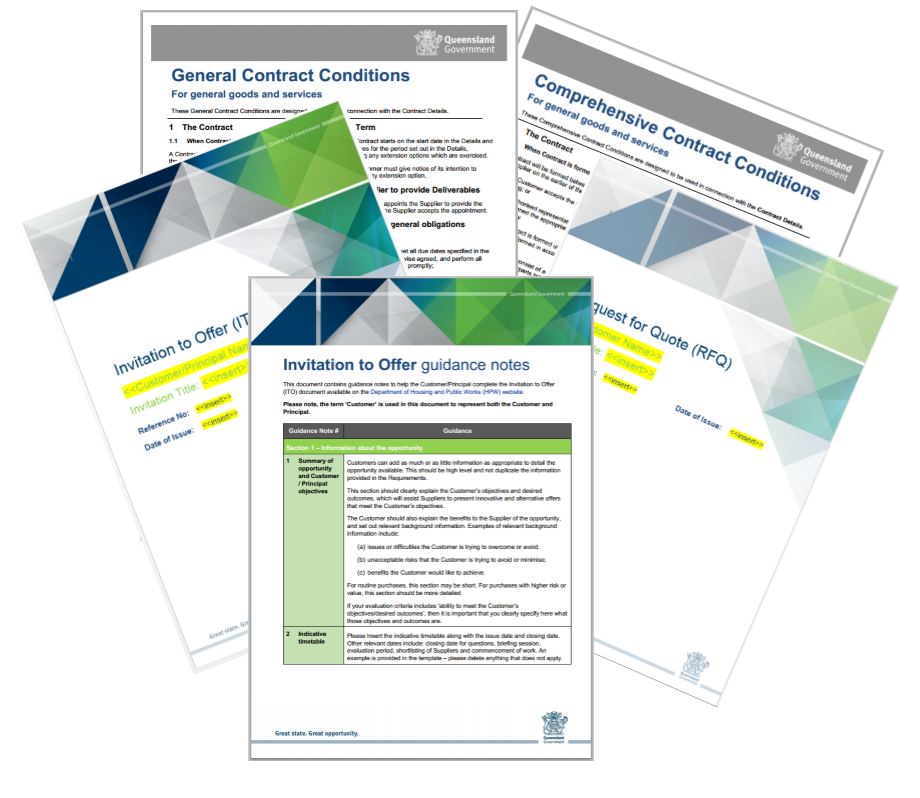
As a key component of their goal of making it easier and more efficient for suppliers and agencies  to do business with each other, in February this year the Procurement Transformation Division launched a new set of goods and services procurement invitation and contractual frameworks for use by all Government Agencies. If you are a supplier to or a buyer for the Queensland State Government  and you haven’t familiarised yourself with them yet, then it is high time you did. So what is new and what do we need to know about this new framework?

Read More »

What can we learn from the Competitive Dialogue process model?

Competitive dialogue is an approach to market that is somewhat akin to parallel negotiation, but instead of hashing out the finer points of the final contract, the aim is to have the market refine the specification before it is published to invite final offers. It utilises the additional parameters of shared intellectual property and a collaborative process in a controlled environment that retains competitive tension through to the signing of the final contract. First written into European procurement regulations in 2006, the methodology has become a preferred method of market engagement for complex projects in the UK and it is now written into the procurement policies in New Zealand, but it is largely unheard of in Australia. The process is designed for the strictly regulated public sector procurement environment of Europe, but is there something to be learned for other environments?

Read More »

The importance of compliance with policy

A few years ago I was told by a middle manager to stop referring to the policy “…as the policy is not always right”. More recently I was in a procurement reform workshop and the statement was made that we should “…stop focusing on compliance and instead focus on outcome”. Back a few years I was chatting to a bio chemist who was traveling the world reviewing quality systems, he said “Australia has some of the best quality systems I’ve seen anywhere in the world…none of them work, but on paper they look great”. These are all symptoms of the same issue and often “reducing compliance” is seen as the answer, but what is really going on?

Read More »

Managing overload in procurement

I have found that generally ten concurrent procurement projects of varying complexity per practitioner is about the upper limit of being able to ensure enough focus is placed on each job. Right now though, with the combination of team members being on leave and the new year projects kicking off, I find myself with closer to 30 concurrent jobs. As I was attempting to review a complex plan, I could see the Outlook popups fading in and out in an almost constant stream. I likened it to sitting in a boat under a waterfall trying to bail it out with a thimble. So what tactics can we use to manage these periods of intense overload?

Read More »

What is so bad about single sourcing?

Proponents of single sourcing will identify value for money in the close working relationship, saved time through removal of ramp up requirements and extensive knowledge of the organisation. So why do procurement professionals frown upon single sourcing to the point of implementing policies and extended approvals in an attempt to deter it?

Read More »

Advanced Excel Contracts Manager – Overview

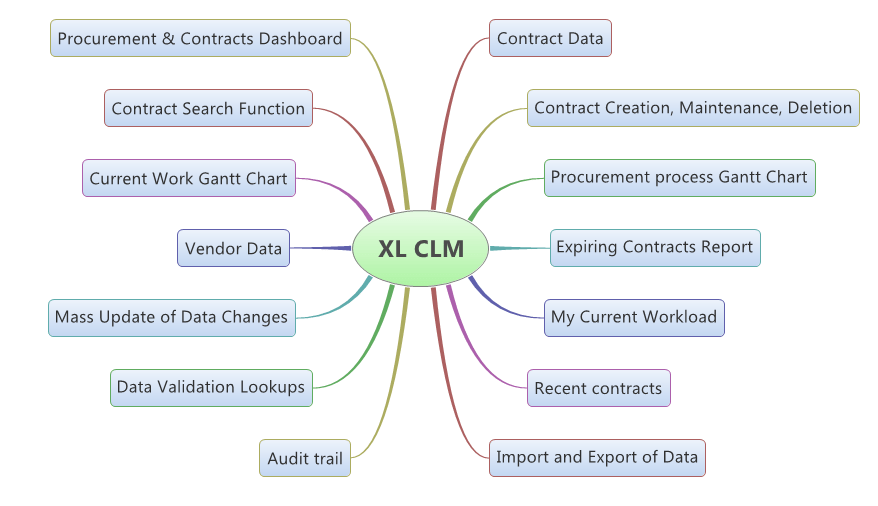
Spreadsheets are a powerful and commonly used tool in procurement. Whether used to track what contracts we have, calculate cost, score evaluations or tracking projects. However, few Excel workbooks in procurement really leverage the full power and possibilities of Excel. With just a basic knowledge of the Visual Basic for Applications (VBA) language, you can turn your Excel workbook, into an Excel Application with functionality you never considered possible in a spreadsheet. This is the first in a series of blogs covering the development and use of an Excel Application to build a Advanced Excel Contracts Manager for managing Contract Lifecycle Management (CLM).

Read More »